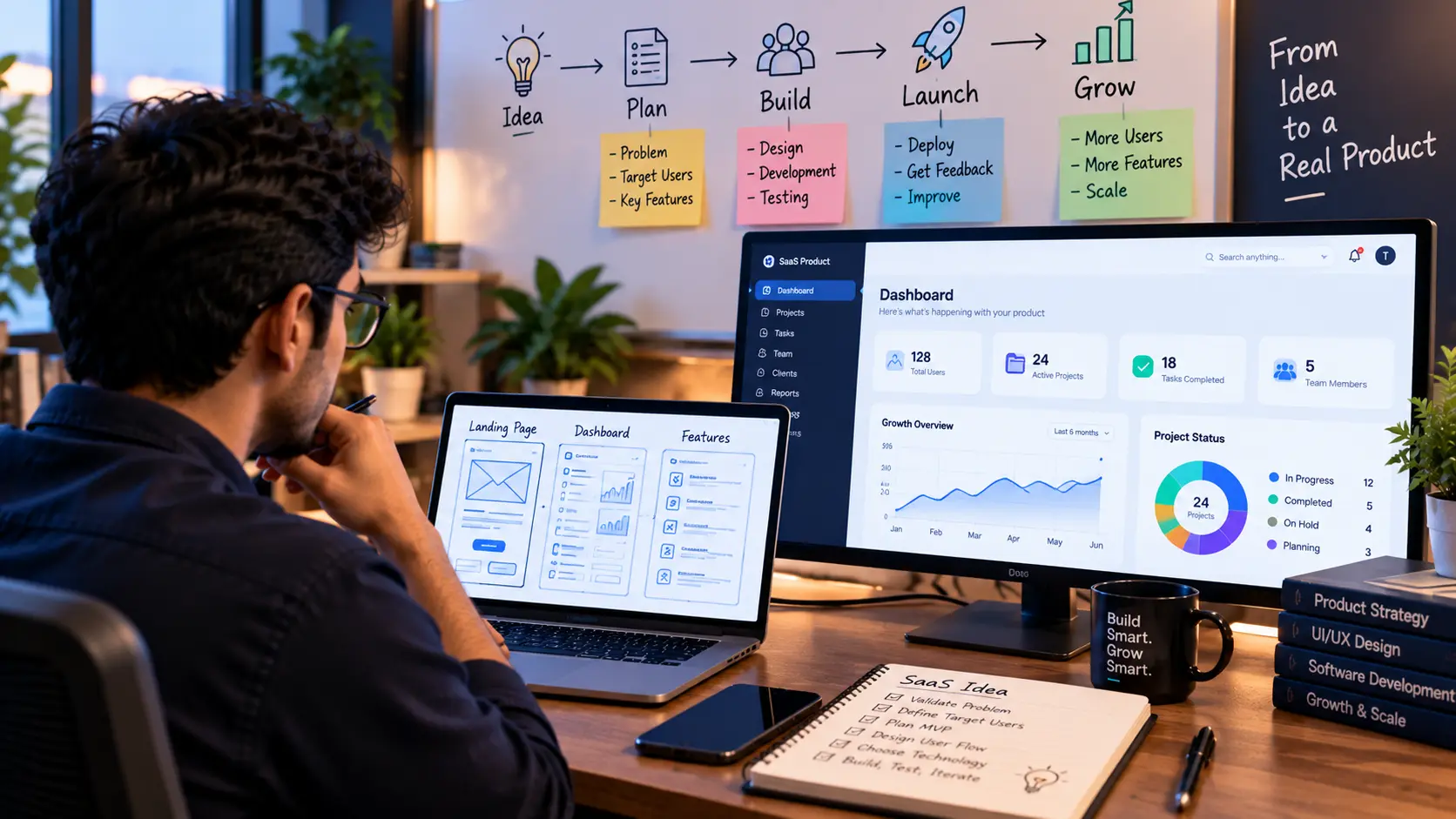
Every Good Product Starts With an Idea
Maybe you've noticed a problem in your industry. Perhaps you've seen businesses managing their daily work through spreadsheets, or you've thought about creating a platform that could make a particular task easier. You start imagining features, dashboards, user accounts and how everything might work. Before long, you have an exciting software idea. But there's one important question: Where do you actually start? Building a SaaS product is not just about writing code or designing an attractive interface. It starts with understanding the problem, the people who experience it and whether your proposed solution would genuinely be useful. A little planning at the beginning can save a lot of unnecessary development later.
Start With the Problem, Not the Features
One common mistake when planning a software product is thinking about features before understanding the problem. For example, imagine you want to build a project management platform. You might immediately think about: Task management. Team dashboards. Notifications. Reports. Calendar views. User permissions. These features may be useful, but first ask yourself: What problem are you trying to solve? Are teams struggling to track responsibilities? Are managers unable to understand project progress? Is information scattered across different tools? Understanding the actual problem helps you decide which features are important and which ones can wait. A useful product doesn't need every possible feature. It needs to solve the right problem.
Understand Who Will Use Your Product
Once you've identified the problem, think about the people who will use your software. Your product might be designed for: Small business owners. Startup founders. Educational institutions. Sales and marketing teams. Freelancers. Enterprise organizations. Different users have different expectations. For example, a small business owner may prefer a simple dashboard that makes everyday tasks easier. A large organization may need advanced permissions, reporting and multiple departments. Try speaking with people who experience the problem you're trying to solve. Ask how they currently manage the process, what frustrates them and what they would like to improve. Real conversations can reveal things that are easy to miss when planning a product alone.
Plan Your MVP Before Building Everything
- You've probably heard the term MVP, or Minimum Viable Product. An MVP is an early version of your software that includes the essential functionality needed to address the main problem. Think of it as the first useful version of your idea. For example, if you're building a CRM platform, your initial version might include: User login and authentication. Lead and contact management. Basic sales pipeline. Follow-up reminders. A simple dashboard. Advanced analytics, complex automation and additional integrations can be considered later. The idea is to build something useful, test it with actual users and learn from their feedback. You don't need to build the entire product before discovering whether people find it valuable.
Think About the User Experience
A product may have excellent technical functionality, but that doesn't automatically make it enjoyable to use. Imagine opening an application and finding too many menus, confusing buttons and information spread across several screens. Even a powerful product can become frustrating when the experience is poorly planned. Before development, consider: What should users see immediately after logging in? How easily can they complete their main tasks? Is the navigation easy to understand? Does the application work properly on mobile devices? Are important actions clearly visible? Can different users access only the information they need? Creating simple wireframes and user flows before development can help identify problems early. Good UI/UX is not just about appearance. It's about making the product easier to understand and use
Choose the Right Technology
Once the product requirements become clearer, it's time to think about the technology. The technology stack should support your product's functionality, expected usage and future development. For example, a SaaS web application might use: Frontend React or Next.js for building the user interface. Backend Node.js, Express or Python for application logic and APIs. Database MongoDB or PostgreSQL for managing application data. Authentication Secure login, user management and role-based permissions. Infrastructure Suitable cloud hosting, storage, monitoring and deployment tools. These are examples, not a fixed formula. The right technology depends on the specific product. Avoid choosing tools simply because they're popular. Choose technologies that fit the actual requirements and can be maintained as the product evolves.
Don't Forget Security and Scalability
A SaaS product often handles user accounts, business information and other important data. Security should be considered from the beginning. Some essential areas include: Secure authentication. Password protection. Role-based access control. Input validation. API security. Data backups. Proper error handling. Protection of sensitive information. You should also think about how the product might grow. Will it support multiple organizations? Will different companies have separate data? Will administrators need different permissions? Could the application handle more users in the future? Planning these things early can help avoid expensive architectural changes later. You don't need to build an enterprise-scale system on day one, but you should understand where the product might be heading.
Build, Test and Learn
Once the requirements and design are ready, development can begin. But launching the first version should not be treated as the finish line. Test the product with real users. Observe how they interact with it. Find out which features are useful, where they get confused and what they would like to improve. Pay attention to: User feedback. Application performance. Navigation problems. Unexpected errors. Feature usage. Security issues. Use what you learn to decide what should be improved next. Product development is an ongoing process. The best direction often becomes clearer after people start using the software.
Common Mistakes to Avoid
If you're planning your first SaaS product, keep these common mistakes in mind. Building Too Many Features Trying to include everything in the first release can increase development time and complexity. Ignoring User Feedback An idea that sounds useful to its creator may not solve the problem users actually experience. Choosing Technology Too Early The technology should follow the product requirements, not the other way around. Ignoring Security Security is much easier to plan from the beginning than to retrofit into a poorly structured application. Skipping Product Planning Without clear requirements, development can become confusing and lead to unnecessary rework. Expecting Immediate Success A product needs testing, feedback, improvements and a clear understanding of its intended users.
Final Thoughts
Turning a software idea into a SaaS product can feel like a big journey, especially when you're starting from scratch. But you don't need to figure everything out at once. Start by understanding the problem. Talk to potential users. Identify the essential features and plan a practical first version. Then build, test, learn and improve. A successful product is not simply the one with the most features. It's the one that gives people a genuine reason to use it. At GHANEX TECH, we believe every good digital product starts with the right questions and a clear purpose. Have an idea worth building? Start with the problem, and build from there.
Build Smart. Grow Smart.